
Introduction
Managing diabetes does not mean completely eliminating rice from your diet-it means choosing the right type of rice. For years, white rice has been criticized for causing rapid spikes in blood sugar levels, leading many diabetics to avoid it altogether.
However, traditional rice varieties like Kala Namak Rice are changing this narrative.
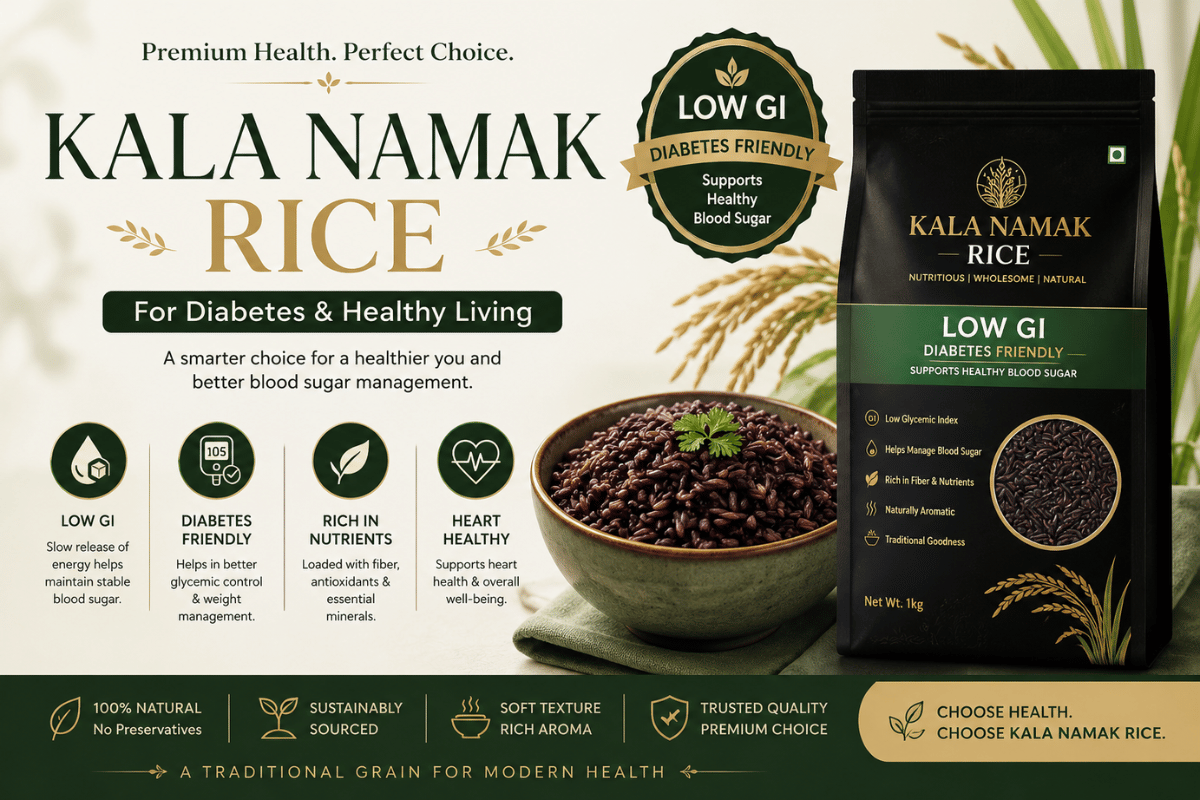
Kala Namak Rice for diabetes is gaining popularity as a low glycemic index (low GI rice) that helps maintain stable blood sugar levels while still allowing people to enjoy rice as part of their daily meals.
With increasing awareness about healthy rice alternatives for diabetes, Kala Namak Rice is emerging as one of the best low GI rice options in India and globally.
What is Low GI Rice and Why It Matters for Diabetes?
The glycemic index (GI) is a measure of how quickly a food raises blood sugar levels.
- High GI foods → Rapid sugar spikes
- Low GI foods → Slow and controlled glucose release
Low glycemic index rice is rice that releases glucose slowly into the bloodstream, helping maintain stable blood sugar levels. Kala Namak Rice is considered a low GI rice, making it suitable for people with diabetes when consumed in moderation.
For people with diabetes, choosing low GI rice is crucial for:
- Preventing blood sugar spikes
- Improving insulin response
- Maintaining long-term glucose control
Why Kala Namak Rice is a Low GI Rice
Kala Namak Rice is considered a low glycemic rice due to its natural composition and minimal processing.
Key Factors:
- Retains natural fiber
- Less polished compared to white rice
- Slower digestion rate
- Rich in micronutrients
These characteristics make it one of the most recommended options for:
- low GI rice India
- diabetic friendly rice
- best rice for sugar patients
How Kala Namak Rice Supports Healthy Blood Sugar
1. Slow Glucose Release
Kala Namak Rice breaks down slowly during digestion, ensuring gradual glucose absorption.
2. Reduced Blood Sugar Spikes
Unlike white rice, it prevents sudden increases in blood sugar levels.
3. Improved Insulin Sensitivity
Its nutrient profile supports better insulin response over time.
Kala Namak Rice supports healthy blood sugar levels by releasing glucose slowly, reducing spikes, and improving insulin response. This makes it a better rice option for diabetes patients compared to regular white rice.
Nutritional Value of Kala Namak Rice
Kala Namak Rice is not just about glycemic index—it also offers strong nutritional benefits:
- Iron-rich
- Contains antioxidants
- Natural fiber content
- Essential minerals
These nutrients help in:
- Improving metabolism
- Supporting overall health
- Reducing inflammation
Kala Namak Rice vs Other Rice Types
White Rice
- High GI
- Low fiber
- Causes rapid sugar spikes
Brown Rice
- Medium GI
- Moderate fiber
- Better than white rice
Kala Namak Rice
- Lower GI
- Rich in nutrients
- Better digestion
- Suitable for diabetic diet
Among different rice types, Kala Namak Rice is considered a better option for diabetes because of its lower glycemic impact and higher nutritional value compared to white rice.
Is Kala Namak Rice Safe for Daily Consumption?
Yes, Kala Namak Rice can be included in a daily diet if consumed in moderation.
Tips for Daily Use:
- Keep portion size controlled
- Combine with protein (dal, paneer, chicken)
- Add vegetables for fiber
- Avoid overeating
This ensures better blood sugar management while enjoying rice.
Best Ways to Eat Kala Namak Rice for Diabetes
To maximize benefits:
- Pair with high-protein foods
- Avoid sugary accompaniments
- Use healthy cooking methods
- Combine with salads and vegetables
This helps maintain a balanced diabetic diet.
Who Should Eat Kala Namak Rice?
Kala Namak Rice is ideal for:
- Diabetes patients
- Pre-diabetic individuals
- Health-conscious consumers
- People on weight loss diets
- Individuals following low GI diets
It is also suitable for those searching:
- best rice for diabetes patients
- healthy rice options India
- low glycemic foods list
Global Demand for Low GI Rice Like Kala Namak Rice
With rising diabetes cases worldwide, the demand for low GI rice is increasing across:
- USA
- UAE
- UK
- Canada
- Australia
Kala Namak Rice is gaining recognition as a premium diabetic-friendly rice globally.
Where to Buy Authentic Kala Namak Rice
To get the maximum benefits, it is important to choose high-quality rice.
You can explore premium export-quality rice from:
Kala Namak Rice Exporter India
Conclusion
Choosing the right rice can make a significant difference in diabetes management.
Kala Namak Rice for diabetes is a powerful alternative to regular rice, offering:
- Low glycemic impact
- Better nutrition
- Improved digestion
- Stable blood sugar levels
By incorporating Kala Namak Rice into a balanced diet, individuals can enjoy rice without compromising their health.
Frequently Asked Questions (FAQs)
Is Kala Namak Rice a low GI rice?
Yes, Kala Namak Rice is considered a low glycemic index rice, making it suitable for diabetes patients.
Can diabetics eat Kala Namak Rice daily?
Yes, but in controlled portions and as part of a balanced diet.
Which rice is best for diabetes?
Low GI rice like Kala Namak Rice and brown rice are better options.
Does Kala Namak Rice reduce blood sugar?
It does not directly reduce sugar but helps maintain stable blood sugar levels.
Is Kala Namak Rice better than white rice?
Yes, it has lower glycemic impact and higher nutritional value.