
Introduction
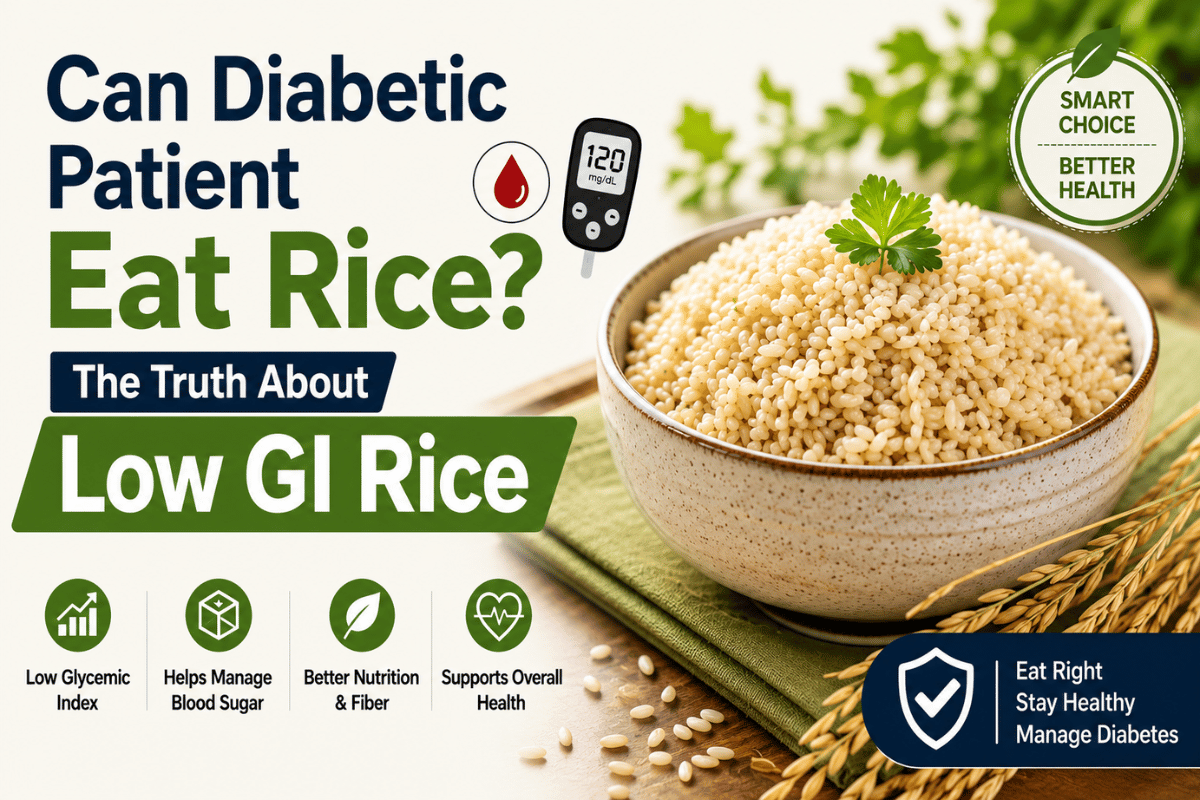
One of the most common questions asked by people with diabetes is: “Can diabetics eat rice?”
For years, rice has been considered a “problem food” due to its ability to raise blood sugar levels quickly. Many diabetics are advised to eliminate rice completely from their diet. But is that really necessary?
The truth is more nuanced.
Rice itself is not the problem-the type of rice and portion size make all the difference. With the growing awareness of low glycemic index (GI) foods, healthier rice options like Kala Namak Rice are changing how diabetics approach their diet.
In this article, we will uncover the truth about rice and diabetes, explain how low GI rice works, and help you understand how to include rice safely in a diabetic diet.
Can Diabetics Eat Rice?
Yes, diabetics can eat rice if they choose the right type of rice and control portion sizes. Low glycemic index rice such as Kala Namak Rice releases glucose slowly and is a better option compared to regular white rice.
This means you don’t have to completely eliminate rice—you just need to make smarter choices.
Why Rice is Considered Risky for Diabetes
Rice is rich in carbohydrates, which break down into glucose during digestion.
The Problem with Regular White Rice:
- High glycemic index
- Rapid digestion
- Causes sudden blood sugar spikes
- Low fiber content
Because of these factors, white rice is often discouraged for diabetics.
What is Glycemic Index (GI)?
The glycemic index (GI) measures how quickly a food raises blood sugar levels.
- High GI (70+) → Fast sugar spikes
- Medium GI (56–69) → Moderate effect
- Low GI (≤55) → Slow, controlled release
The glycemic index (GI) is a measure of how quickly food raises blood sugar levels. Low GI foods release glucose slowly, making them more suitable for diabetes management.
Why Low GI Rice is Better for Diabetics
Low GI rice is digested more slowly, which helps:
- Prevent sudden blood sugar spikes
- Improve insulin response
- Maintain steady energy levels
- Support long-term diabetes control
Low GI rice is better for diabetics because it releases glucose gradually into the bloodstream, helping maintain stable blood sugar levels and reducing the risk of spikes.
Examples of Low GI Rice in India
Some rice varieties are better suited for diabetics:
- Kala Namak Rice (best option)
- Brown rice
- Unpolished rice
- Traditional heritage rice
Among these, Kala Namak Rice is gaining popularity as a diabetic-friendly rice in India.
Why Kala Namak Rice is a Better Choice for Diabetes
Kala Namak Rice offers multiple advantages:
1. Lower Glycemic Impact
It helps maintain stable blood sugar levels.
2. Rich in Nutrients
Contains iron, antioxidants, and minerals.
3. Better Digestion
Its fiber content supports slower glucose absorption.
4. Traditional and Natural
Minimally processed, making it healthier than refined rice.
Kala Namak Rice is a better option for diabetics because it has a lower glycemic impact, higher nutritional value, and supports gradual glucose release compared to white rice.
How Much Rice Can a Diabetic Eat?
Portion control is just as important as choosing the right rice.
Recommended Guidelines:
- 1 small bowl per meal
- Combine with protein and fiber
- Avoid overeating
- Monitor blood sugar levels
Best Ways to Eat Rice for Diabetes
To reduce blood sugar impact:
- Pair rice with dal, paneer, or chicken
- Add vegetables for fiber
- Avoid sugary or fried accompaniments
- Use healthy cooking methods
This helps create a balanced meal.
Rice vs No Rice: What’s Better?
Many people believe eliminating rice completely is the only solution.
Reality:
- Completely avoiding rice is not necessary
- Balanced consumption is more sustainable
- Choosing low GI rice is more effective
Diabetics do not need to completely avoid rice. Choosing low GI rice and maintaining portion control is a more effective and sustainable approach to managing blood sugar.
Common Myths About Rice and Diabetes
Myth 1: Rice is completely forbidden
Truth: Only high GI rice should be limited.
Myth 2: Brown rice is the only option
Truth: Traditional rice like Kala Namak Rice is also beneficial.
Myth 3: Eating rice always increases sugar levels
Truth: Low GI rice has a controlled effect.
Who Should Choose Low GI Rice?
Low GI rice is beneficial for:
- Diabetes patients
- Pre-diabetic individuals
- Weight-conscious people
- Health-focused consumers
Global Trend: Shift Toward Healthy Rice
With rising diabetes cases, the demand for diabetic friendly rice is increasing globally:
- USA
- UAE
- UK
- Canada
- Australia
Kala Namak Rice is becoming a preferred choice worldwide.
Where to Buy Authentic Kala Namak Rice
To get maximum health benefits, choose premium quality rice.
Explore here:
Kala Namak Rice Exporter India
Conclusion
So, can diabetics eat rice? The answer is yes—with the right choices.
By selecting low glycemic rice like Kala Namak Rice, controlling portions, and maintaining a balanced diet, diabetics can safely include rice in their meals.
Instead of eliminating rice completely, the smarter approach is to choose healthier alternatives that support blood sugar control.
Frequently Asked Questions (FAQs)
Can diabetics eat rice daily?
Yes, if they choose low GI rice and maintain portion control.
Which rice is best for diabetes?
Low GI rice such as Kala Namak Rice and brown rice.
Does rice increase blood sugar?
High GI rice does, but low GI rice has a controlled effect.
Is Kala Namak Rice good for diabetes?
Yes, it is considered a diabetic-friendly rice.
How to reduce sugar spike after eating rice?
Combine rice with protein and fiber and limit portion size.